
Observatory operations often rely on a collection of independent software tools.
Except giant ones, like ESO for which I worked in the past, who have enough resources to create a consistent software suite.
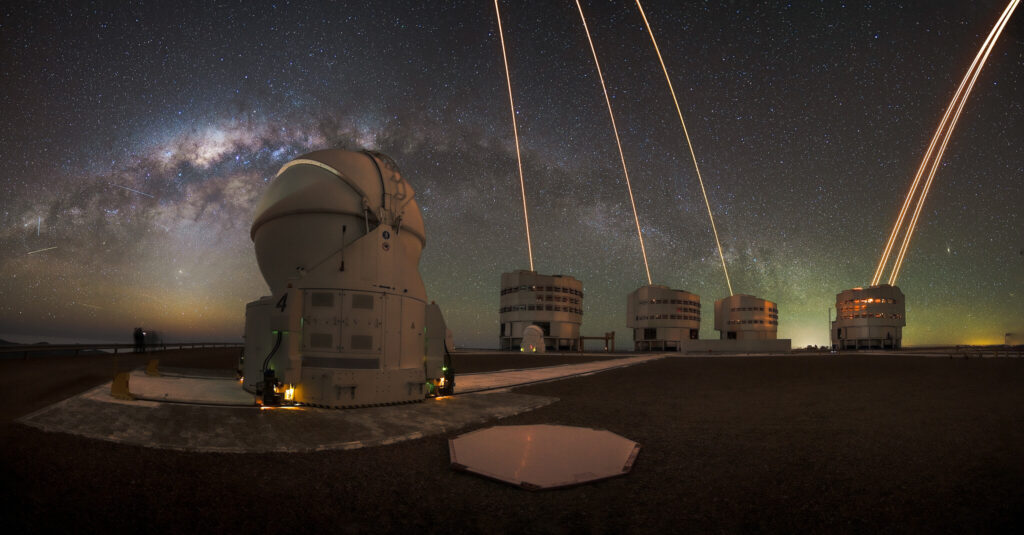
Telescope control systems, camera software, scheduling tools, data pipelines, weather monitoring, communication channels, and archiving systems typically evolve separately over time. Each of them may work well on its own. The difficulty appears when they have to operate together.
Fragmentation rarely looks like a problem at first. Individual components are often well designed and specialized for their task. Over time, however, operating an observatory becomes less about astronomy and more about maintaining the connections between these components.
A camera control program writes files to one location. A reduction pipeline expects them somewhere else. Telescope control reports its state in one interface, while scheduling decisions are recorded in another. Logs accumulate in different formats, and the operational picture of the night becomes distributed across several systems.
None of this prevents observations from happening. But it introduces friction everywhere.
Invisible Operational Work
Fragmentation creates a form of invisible work around the scientific activity itself. Observers and operators spend time checking whether pieces of software still interact correctly, restarting services, translating formats, or writing small scripts to bridge gaps between systems.
This work is rarely visible in project planning or technical documentation. It appears gradually: a shell script here, a cron job there, a small monitoring tool written by someone who understood the system well enough to keep it running.
Much of the expertise required to maintain these arrangements has little to do with astronomy. It is knowledge about system behavior, timing issues between processes, configuration subtleties, or small failure modes that only appear during real operations. When the people who accumulated that knowledge move on, a significant part of the operational understanding can disappear with them.
None of this means the software itself is poor. Fragmentation is often the natural consequence of incremental development. New instruments arrive, new pipelines are added, new tools appear to solve local problems. Over years, the system grows layer by layer.
The question is not whether specialization is necessary. It clearly is. The question is how much operational complexity emerges when the infrastructure that supports observations is assembled from many independent pieces.
At some point, the effort required to keep these pieces working together becomes part of the observatory’s daily operations.
And that effort is rarely discussed when we talk about astronomical infrastructure.
No responses yet